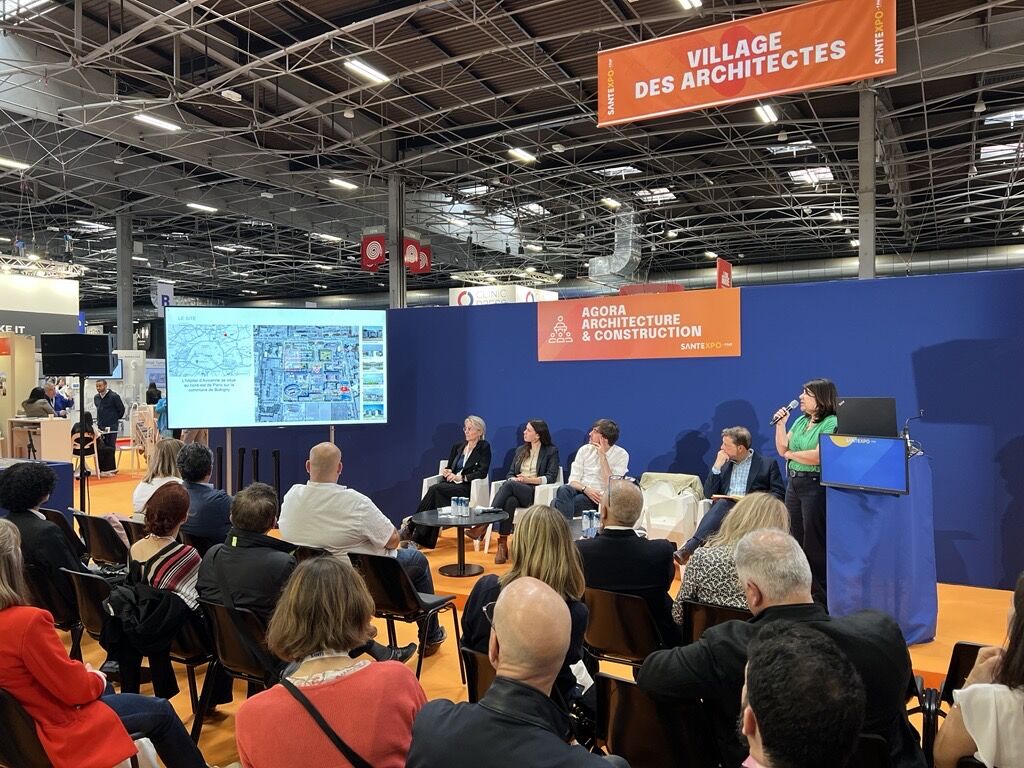
On Tuesday, May 20, Cécile Grouille spoke at the Village des Architectes to present the ongoing project for the Women-Children Pavilion at Avicenne Hospital in Bobigny.
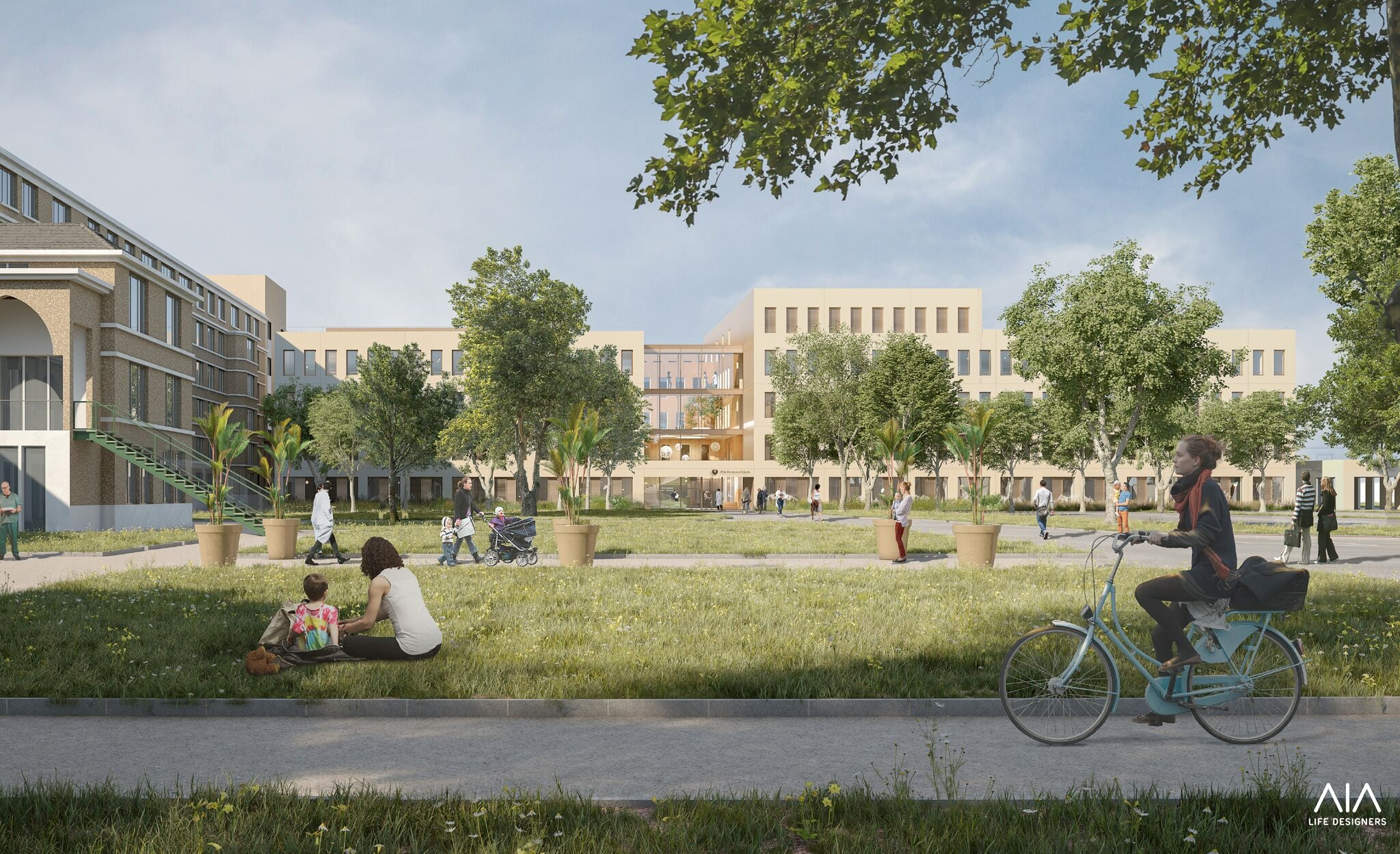
In 2022, the architectural teams of AIA Life Designers, in collaboration with Rabot Dutilleul Construction and TPFI, were commissioned by AP-HP (Assistance Publique – Hôpitaux de Paris) to design this key healthcare hub, certified as an Eco-Maternity, which will include :
– 31 outpatient care stations,
– 24 spaces dedicated to assisted reproductive technology (ART),
– 105 gynecology-obstetrics inpatient beds,
– 21 neonatal bassinets,
– 28 pediatric inpatient beds,
– 6 delivery rooms,
– 2 operating rooms.
This ambitious project addresses a major local healthcare need: in this northeastern sector of the Paris region, where the birth rate is higher than the national average, it is essential to provide a care offering tailored to mothers, women, children, and their specific vulnerabilities.
From an architectural standpoint, the project presents a double challenge :
Transforming care practices for a more seamless patient_journey,
Harmoniously integrating the new building into an existing hospital site with high heritage value.
Founded in 1935, Avicenne Hospital – originally the Franco-Muslim Hospital – features Moorish and colonial-inspired architecture, with several listed heritage elements. The new pavilion must therefore be functional, modern, and respectful of this unique historical context.
Peggy LE BIHAN presented AIA Life Designers’ expertise in the design of intelligent, “digital native,” measurable, and resilient healthcare buildings, leveraging data to support a sustainable, holistic health journey between the city and the hospital.
Through our involvement with the Smart Buildings Alliance (SBA), we offer a specialized consulting service in connected healthcare, built on a deep understanding of the entire building value chain: ANAP, IHF, project ownership, design teams, contractors, integrators, suppliers, and maintenance providers.
We notably contributed to the development of the R2S4Care framework, which aims to become the benchmark for the Smart_Hospital, serving healthcare facilities, users, and territories.